Best Homemade Chicken Soup – Rich Broth, Tender Chicken, Pure Comfort
Homemade chicken soup is the one recipe I make every single time someone in my house gets sick. Not because I think it has magical healing properties though there is some actual science behind why it helps but because it is the only thing that consistently makes people feel better and want to eat when they otherwise would not.
My grandmother made it with a whole chicken every time. Hours on the stove, the whole house smelling incredible by noon. I do not have her patience, but I have spent enough time understanding what she was actually doing that I can get most of the way there in about fifty minutes with bone-in thighs and a few shortcuts that do not sacrifice anything that matters.
This homemade chicken soup is what I make when it counts. And it has never let me down.
What I Learned About Making Homemade Chicken Soup Properly
Most homemade chicken soup recipes list ingredients and give you a sequence of steps. What they skip is the explanation of why certain choices produce better broth, and once you understand that, making a genuinely rich, deeply flavorful soup becomes straightforward instead of mysterious.
Bone-in chicken is not optional if you want proper homemade chicken soup broth. Bones contain collagen the protein that makes up connective tissue. When collagen simmers in water for thirty minutes or more, it breaks down into gelatin. Gelatin gives broth its body, its lip coating richness, and that quality of feeling nourishing rather than watery. Boneless skinless chicken breast produces thin, pale broth that tastes like hot water with chicken flavor. Bone-in thighs produce broth that coats a spoon. The difference is collagen content, and the difference is significant.
The mirepoix onion, carrot, and celery is not just vegetables thrown in for flavor. These three ingredients create a specific chemical interaction that forms the flavor base of Western-style soups. Onions contribute glutamates the same compounds responsible for umami. Carrots add natural sweetness that balances the savory depth. Celery adds a green, slightly bitter note that keeps the soup from tasting one dimensional. Together they create a flavor backdrop that makes everything taste more complex than any single ingredient could on its own.
Starting with cold water rather than hot produces clearer broth. When chicken goes into cold water that slowly heats up, proteins come out of the chicken gradually and coagulate at the surface as foam easy to skim off. Starting with boiling water shocks the chicken and drives proteins into the broth so quickly they disperse throughout rather than coagulating at the surface. Cold start, gradual heat, skim the foam the result is broth that is both clearer and more flavorful.
The foam that appears in the first ten minutes of simmering is coagulated protein myoglobin and other proteins from the chicken. Skimming it off produces a cleaner-tasting broth. Leaving it in is not dangerous but the soup tastes slightly murkier and less clean. Two minutes of skimming at the start makes the final broth noticeably better
A Few Notes Before You Start
Homemade chicken soup made with bone in chicken thighs is ready in fifty minutes. Made with a whole chicken it takes two to three hours but the broth is richer. Made with a rotisserie chicken from the grocery store it takes twenty five minutes and is genuinely excellent for a weeknight. All three methods produce good soup. The choice depends on how much time you have.
Bay leaves are one of those ingredients that are hard to taste individually but produce a noticeably flatter soup when they are missing. They contain volatile aromatic compounds that add a subtle herbal background to the broth. Two leaves for a full pot of soup is standard.
Fresh parsley added at the very end rather than at the beginning. Parsley contains volatile oils that dissipate with heat adding it at the start of cooking means those oils are gone by the time the soup reaches the bowl. A handful stirred in at the end preserves the bright, grassy freshness that makes the soup taste alive rather than like something that has been sitting on the stove for hours.
Salt the broth in stages. Add a conservative amount at the start and adjust at the end. The broth concentrates as it simmers and what seems lightly salted at thirty minutes can taste too salty at fifty. Always final-taste and adjust just before serving.
A Dutch oven or heavy bottomed pot holds heat more evenly than thin pots and produces a more consistent simmer. The simmer is important a rolling boil makes the broth cloudy and can make the chicken tough. Gentle bubbling, not aggressive boiling.
Where Homemade Chicken Soup Goes Wrong
Thin, watery broth: boneless chicken was used or the soup did not simmer long enough for collagen to break down. Switch to bone in thighs and simmer for at least forty minutes.
Bland broth despite good ingredients: not enough salt, vegetables were added raw without any softening first, or the soup was not simmered long enough for flavors to develop. Soften the mirepoix in butter or oil for five minutes before adding liquid this step builds flavor that raw vegetables simmered in water do not produce.
Tough, dry chicken: the soup boiled instead of simmered, or the chicken cooked too long. A gentle simmer is essential. Pull the chicken as soon as it reaches 165F and shred it return it to the soup for the last five minutes only.
Vegetables turned mushy: they went in too early and cooked the entire time. Add the vegetables after the broth is established and cook them just until tender about fifteen to twenty minutes. They should hold their shape when you eat the soup.
Greasy surface on the broth: the chicken had a lot of fat and it was not skimmed. Use a wide spoon to skim the fat from the surface during cooking, or make the soup a day ahead and refrigerate the fat solidifies on top overnight and lifts off in one piece.
Four Homemade Chicken Soup Variations Worth Making
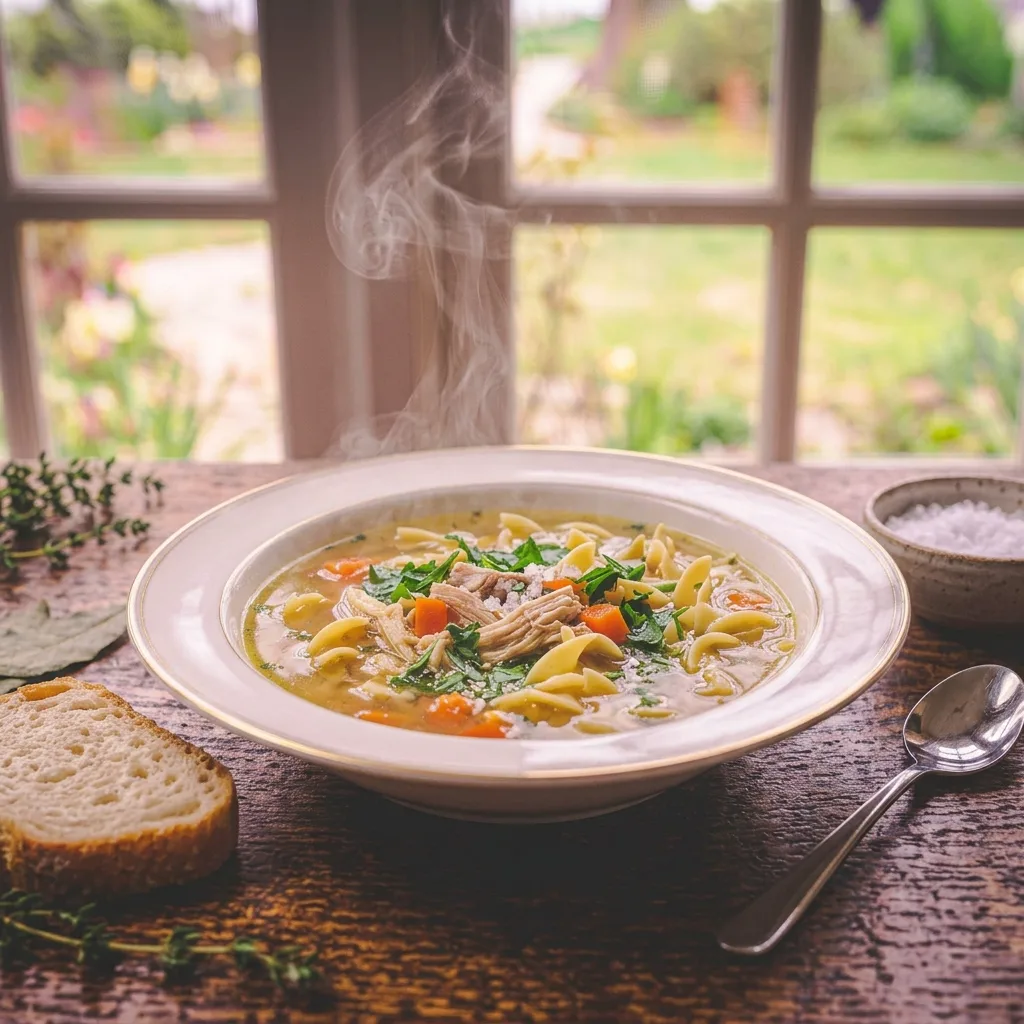
Classic chicken noodle soup: Add two cups of egg noodles in the last eight minutes of cooking. Egg noodles absorb broth as they cook and become silky and tender. Do not add them too early or they turn soft and fall apart. This is the version most people think of when they think of homemade chicken soup.
Chicken and rice soup: Add half a cup of rinsed long-grain rice in the last twenty minutes. Rice absorbs more broth than noodles and makes the soup heartier. Jasmine rice works especially well. Note that rice continues absorbing broth after cooking if you plan to store leftovers, cook the rice separately and add per bowl.
Lemon chicken soup: Add the juice of one lemon and one teaspoon of lemon zest in the last five minutes of cooking. The acid brightens the entire bowl and makes the herbal notes more pronounced. A handful of fresh dill instead of parsley transforms this into something closer to Greek avgolemono in spirit if not in technique.
Spicy chicken soup: Add one teaspoon of smoked paprika, half a teaspoon of cumin, and one diced jalapeño with the mirepoix. The warm spices add depth without making it taste like chili. A squeeze of lime at the end lifts everything.
What I Usually Serve Alongside
Homemade chicken soup is a complete meal on its own but the right things on the side make it feel more substantial.
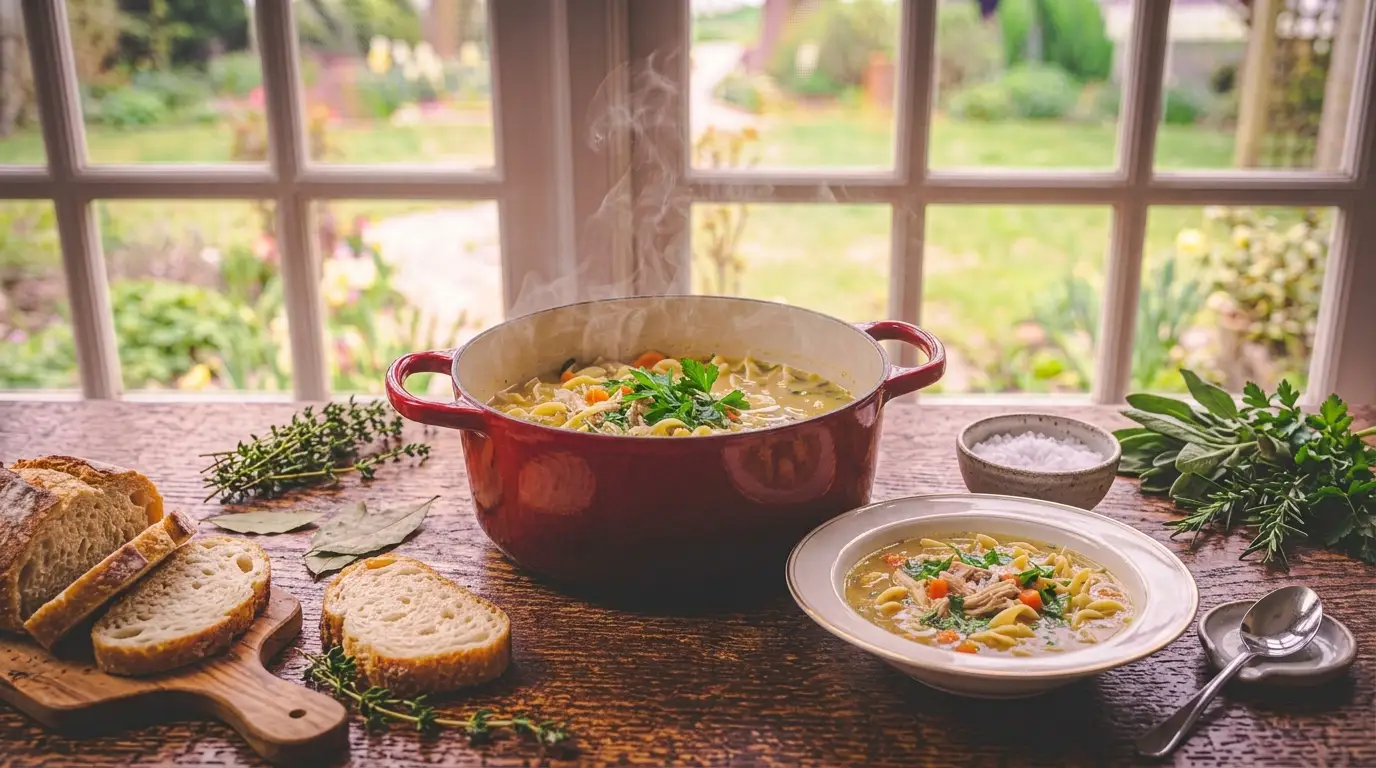
Crusty bread for dipping is the most natural pairing. A thick slice of sourdough or a toasted ciabatta roll soaks up the broth without falling apart in it. The contrast of crispy bread and hot, rich broth is one of those simple combinations that works every time.
Oyster crackers scattered over the top are the classic American approach. They stay crunchy for about two minutes before absorbing broth and turning into something entirely different – both versions are good.
For a full sick-day spread, pair a bowl of homemade chicken soup with Slow Cooker Chicken prepped the day before the slow cooker chicken can be shredded directly into the soup to make an even heartier version. Or try Lemon Herb Chicken sliced over the top for a brighter, fresher bowl.
Storing Homemade Chicken Soup
Homemade chicken soup keeps in the fridge for up to five days in an airtight container. The flavor actually improves overnight as the herbs and vegetables continue releasing flavor into the broth. Day two soup is almost always better than fresh.
If the soup contains noodles or rice, store them separately if possible. Both absorb broth overnight and the soup becomes very thick. Storing them separately means the broth stays broth and you can reheat to the right consistency.
Reheat in a saucepan over medium heat, stirring occasionally. Add a splash of water or additional broth if it has thickened too much overnight.
Homemade chicken soup freezes exceptionally well for up to three months. Freeze without noodles or rice add fresh when reheating. The broth and chicken freeze and thaw without quality loss. Freeze in individual portions for easy sick day access.
Homemade Chicken Soup
Ingredients
Equipment
Method
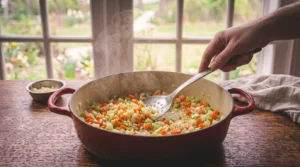
- Soften the mirepoix Melt butter in a Dutch oven over medium heat. Add diced onion, carrots, and celery. Cook, stirring occasionally, for 5 minutes until the onion is softened and slightly translucent. Add minced garlic and stir for 60 seconds. This step builds a flavor base that raw vegetables simmered in water do not produce.
- Add chicken and cold water Place bone in chicken thighs directly on top of the softened vegetables. Pour cold water and chicken broth over everything. The cold liquid start is important it brings out proteins gradually for cleaner broth. Add bay leaves, thyme, salt, and pepper.
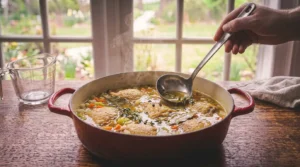
- Bring to simmer and skim Bring to a boil over medium-high heat. As it heats, foam will appear on the surface this is coagulated protein. Skim it off with a wide spoon during the first 8 to 10 minutes. Reduce heat to low and maintain a gentle simmer. Do not let it boil aggressively.

- Simmer the chicken Simmer gently for 30 to 35 minutes until the chicken is cooked through and the meat pulls easily from the bone. Check internal temperature at the thickest part – 165F minimum.
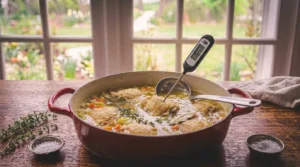
- Remove and shred chicken Remove chicken thighs to a cutting board. Remove and discard bay leaves. When cool enough to handle, remove and discard the skin and bones. Shred the chicken meat into bite-sized pieces using two forks.
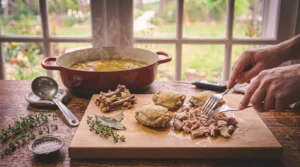
- Add noodles or rice (optional)If adding egg noodles, return broth to a simmer and add noodles now – cook for 8 minutes. If adding rice, add it 20 minutes before the chicken was done. Skip this step for classic broth-based homemade chicken soup.

- Return chicken and finish Return shredded chicken to the pot. Simmer for 5 minutes. Taste the broth and adjust salt – this is the most important moment of the whole recipe. The broth should taste fully seasoned, not flat. Add more salt in small increments until it does.
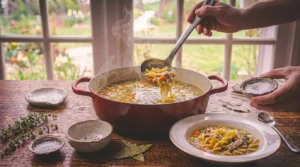
- Add parsley and serve Remove from heat. Stir in fresh parsley. Serve homemade chicken soup immediately in wide bowls with crusty bread or oyster crackers alongside.

Notes
- Bone-in chicken is essential: collagen from bones breaks down into gelatin, giving broth its rich body.
- Cold water start: produces clearer broth than starting with hot water.
- Skim the foam: coagulated protein – removes it for cleaner flavor.
- Gentle simmer only: boiling makes broth cloudy and can make chicken tough.
- Fresh parsley at the end: adding it during cooking destroys the volatile oils that give it flavor.
- Salt in stages: broth concentrates as it simmers – under-salt early and adjust at the end.
- Noodles stored separately: if storing leftovers with noodles, they absorb all the broth overnight.
- Rotisserie chicken shortcut: use the carcass for broth, add shredded meat at the end.
- Storage: fridge up to 5 days, freezer up to 3 months (without noodles or rice).
- Reheat: saucepan over medium heat, add splash of water or broth if too thick.
NUTRITION
(Per Serving – Estimated, without noodles or rice)
| Calories | 245 kcal |
| Protein | 26 g |
| Fat | 12 g |
| Saturated Fat | 4 g |
| Carbohydrates | 8 g |
| Fiber | 2 g |
| Sugar | 3 g |
| Sodium | 580 mg |
| Cholesterol | 115 mg |
Calculated using bone-in skin-on chicken thighs with listed vegetables and broth. Skin removed before eating. Values are estimates and vary by chicken size and ingredient brands.
A Couple More Things
Does homemade chicken soup actually help when you are sick?
There is real science behind this. A study published in the journal Chest found that chicken soup has mild anti inflammatory properties that may help reduce upper respiratory symptoms. The steam from the hot broth loosens congestion. The salt in the broth helps the body retain fluids. And the gelatin from the bones supports gut health. It is not medicine – but it is also not nothing. For safe cooking temperatures and food safety guidelines, the USDA recommends all poultry reach 165F internal temperature.
Can I use rotisserie chicken for homemade chicken soup?
Yes and it makes excellent soup quickly. Pull all the meat off a grocery store rotisserie chicken and shred it. Use the carcass and any bones with the skin to make the broth simmer them in water with the mirepoix for twenty to twenty five minutes, then remove the bones and add the shredded meat for the last five minutes. This produces genuinely good homemade chicken soup in about thirty-five minutes total.
What is the difference between chicken broth and chicken stock?
Broth is made primarily from meat and has a lighter body. Stock is made primarily from bones and has more body from the collagen. For homemade chicken soup, you want stock or something in between, which is what bone-in chicken produces. Using store bought broth as the base liquid adds flavor; using store-bought stock adds body. A mix of water and good-quality boxed stock works if you do not have time to build the broth from scratch.
Can I make homemade chicken soup in a slow cooker?
Yes add all the ingredients to the slow cooker, cover with water or broth, and cook on low for 6 to 8 hours or high for 3 to 4 hours. Remove the chicken, shred it, and return it to the soup. The slow cooker produces a rich, deeply developed broth because the long cook time allows more collagen to break down. Add noodles or rice in the last 30 minutes of cooking on high.
How do I make the broth clearer?
Start with cold water rather than hot. Skim the foam that appears in the first ten minutes of simmering. Keep the soup at a gentle simmer rather than a rolling boil boiling disperses proteins into the broth and clouds it. Straining the finished broth through a fine mesh strainer before adding the final chicken and vegetables also produces a noticeably clearer result.
Hope It Turns Out Great
Homemade chicken soup is one of those recipes that rewards the small things the cold water start, the foam skimming, the fresh parsley at the end. None of those things are difficult. They just need to be done.
Make it once and it will be the recipe you reach for every time someone needs it. Leave a comment below and let me know which variation you tried.