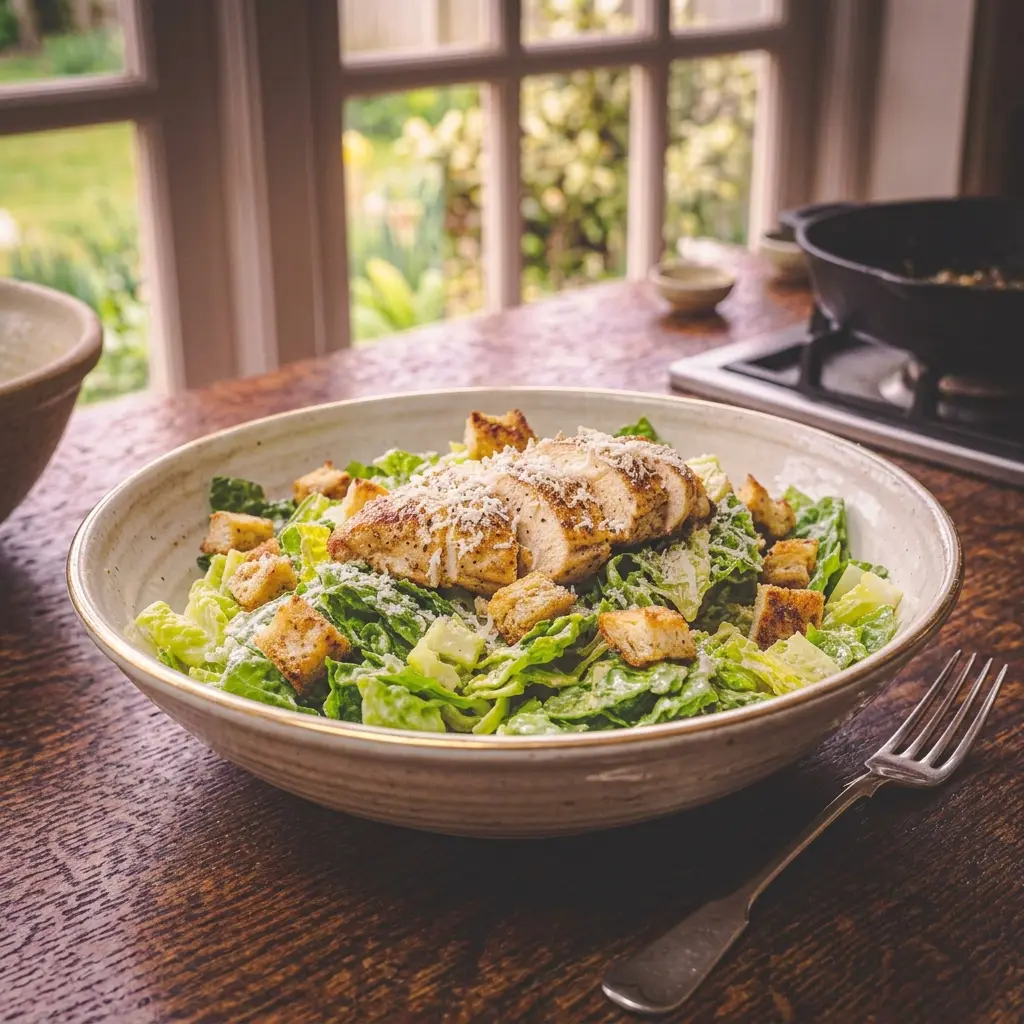
Best Chicken Caesar Salad – Crispy, Creamy & Better Than Any Restaurant
Chicken caesar salad is the dish I have ordered at more restaurants than anything else. It is also the dish that has disappointed me more than anything else dry chicken, soggy croutons, dressing from a bottle that tastes like nothing in particular. For something so simple, most restaurants get it consistently wrong.
I started making chicken caesar salad at home after one particularly bad version at a place I had been looking forward to. The chicken was thin and overcooked, the romaine was wet from being washed without drying, and the croutons were soft. I figured anything I made at home would be better, and I was right. It took a few attempts to get the dressing exactly where I wanted it, but once I understood what each ingredient in the dressing was actually doing, the whole thing became reliable.
Now when I want chicken caesar salad, I make it. It takes thirty minutes, costs less than ordering it, and is significantly better than what I can get for twenty dollars at most places.
What Most Recipes Get Wrong About Chicken Caesar Salad
Most chicken caesar salad recipes treat the components as three separate things cook the chicken, make some croutons, toss with store bought dressing. That approach works but it misses what makes a genuinely great version different.
The dressing is where everything starts. Traditional Caesar dressing contains anchovies, and anchovies are the reason the dressing tastes the way it does. Anchovy fillets are extraordinarily high in glutamates – the naturally occurring compounds responsible for umami. When mashed into a paste and combined with the other dressing ingredients, anchovies do not taste like fish. They disappear entirely into the background and produce a deep, savory richness that is impossible to replicate without them. Worcestershire sauce, which most recipes also include, contains fermented tamarind and anchovy extract for the same reason – more glutamates, more umami depth.
The emulsification of the dressing matters more than most people realize. A properly emulsified Caesar dressing clings to every leaf of romaine rather than pooling at the bottom of the bowl. Emulsification happens when oil droplets are suspended in the water-based components (lemon juice, Worcestershire) by an emulsifying agent. In Caesar dressing, Dijon mustard and the lecithin in egg yolk are the emulsifiers. Whisking vigorously while adding oil slowly forces the oil to break into tiny droplets that stay suspended rather than separating. The result is a dressing that is thick, creamy, and coats the lettuce instead of sliding off it.
Romaine lettuce selection changes the final texture significantly. The outer leaves of a romaine head are larger, more fibrous, and slightly more bitter. The inner leaves – the heart – are more tender, paler, and have a crisper, more delicate texture. Chicken caesar salad made with the hearts of romaine is noticeably better in texture than the same salad made with the full outer leaves. Most grocery stores sell romaine hearts separately – they are worth it.
The croutons are where most home versions fail. Soft croutons from a bag go soggy within two minutes of contact with dressing. Day old bread cubed and toasted in olive oil with garlic until genuinely golden and hard through the center stays crunchy through the entire salad. The difference between a crunchy crouton and a soft one is not the type of bread it is the moisture content. Fresh bread retains moisture that steams the interior as it bakes. Day-old bread has already lost that moisture and toasts through completely.
My Experience Making This a Lot
The thing I got wrong most often in the beginning was dressing quantity. I under dressed the salad because I was worried about it being too heavy. Under-dressed chicken caesar salad is just romaine with chicken on top the dressing is what makes it a caesar salad. Every leaf should be coated but not soaked. Toss more aggressively than feels right and taste a leaf before serving.
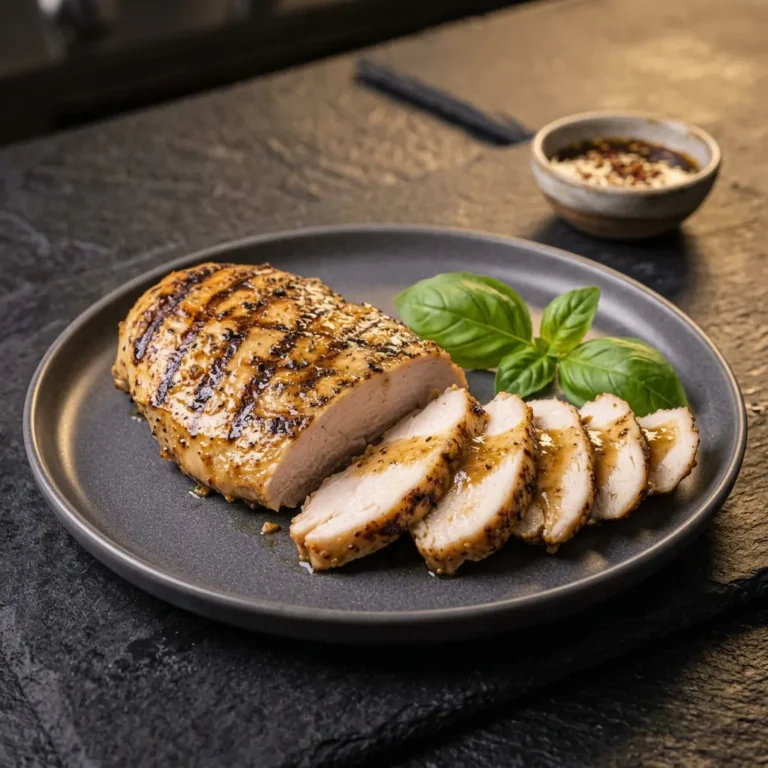
The chicken needs seasoning at every step. Salt and pepper before cooking, not just in the dressing. I pan-sear the chicken in a cast iron skillet at high heat until it has a golden crust, then finish it in the oven at 425F if the pieces are thick. Thin cutlets cook through entirely in the skillet. The char on the exterior adds something that plain baked chicken does not have a slightly crispy, savory edge that contrasts with the creamy dressing.
Parmesan cheese freshly grated over the finished salad is not negotiable. Pre grated Parmesan from a container is dry and flavorless by comparison. A chunk of Parmigiano Reggiano and a microplane grater produces snowy, light shavings that melt slightly into the dressing and add a completely different dimension of flavor.
Dressing temperature matters. Cold dressing straight from the fridge coats lettuce poorly because the oil has solidified slightly. Room temperature dressing flows more easily and distributes more evenly. Take the dressing out of the fridge fifteen minutes before assembling the salad.
What Can Go Wrong With Chicken Caesar Salad
Soggy romaine: the lettuce was not completely dry before dressing. Wet lettuce dilutes the dressing and makes the leaves limp. Spin dry in a salad spinner and then pat with paper towels if you want to be thorough.
Dressing that tastes flat: anchovies were skipped or the Parmesan was from a container. Both anchovies and freshly grated Parmesan are non negotiable for the depth of flavor that makes chicken caesar salad taste like it should.
Dressing that separates in the bowl: the oil was added too quickly during whisking and the emulsion broke. Restart by placing a fresh egg yolk in a clean bowl and slowly whisking the broken dressing into it the lecithin in the new yolk re emulsifies everything.
Soft croutons: fresh bread was used instead of day-old, or the croutons did not bake long enough. They need to be hard through the center, not just golden on the outside.
Dry chicken: it was cooked too long or rested without tenting. For chicken caesar salad, thin cutlets or sliced leftover chicken from the fridge both work well the dressing adds enough moisture that the chicken does not need to be as juicy as it would for a plated dinner.
Four Chicken Caesar Salad Variations Worth Making
Classic chicken caesar salad with homemade dressing: The base recipe as written. Pan-seared chicken, romaine hearts, homemade croutons, anchovy Parmesan dressing. This is the version that most closely matches a good restaurant caesar and the one I make most often.
Grilled chicken caesar salad: Marinate chicken breasts for one hour in olive oil, lemon, and garlic, then grill over medium high heat for six minutes per side. The char from the grill adds smokiness that works especially well with the creamy dressing. Summer version of this recipe.
Kale caesar salad with chicken: Substitute half the romaine with chopped Tuscan kale. Massage the kale with a small amount of the dressing before assembling this breaks down the tough cell walls and makes it tender enough to eat raw. Heartier and more nutritious than all-romaine, and the kale holds up without wilting under dressing.
Caesar salad wrap: Slice the chicken thin, toss all components together with dressing, and roll into a large flour tortilla. Excellent lunch option and travels well for work. The wrap holds together best if the romaine is chopped small before rolling.
What Goes Well With It
Chicken caesar salad is a complete meal on its own but the right additions make it feel more substantial for dinner service.
Garlic bread alongside is the most natural pairing. Toast thick slices of sourdough with olive oil and a garlic clove rubbed across the surface. The crunch of the bread echoes the croutons and the garlic complements the dressing.
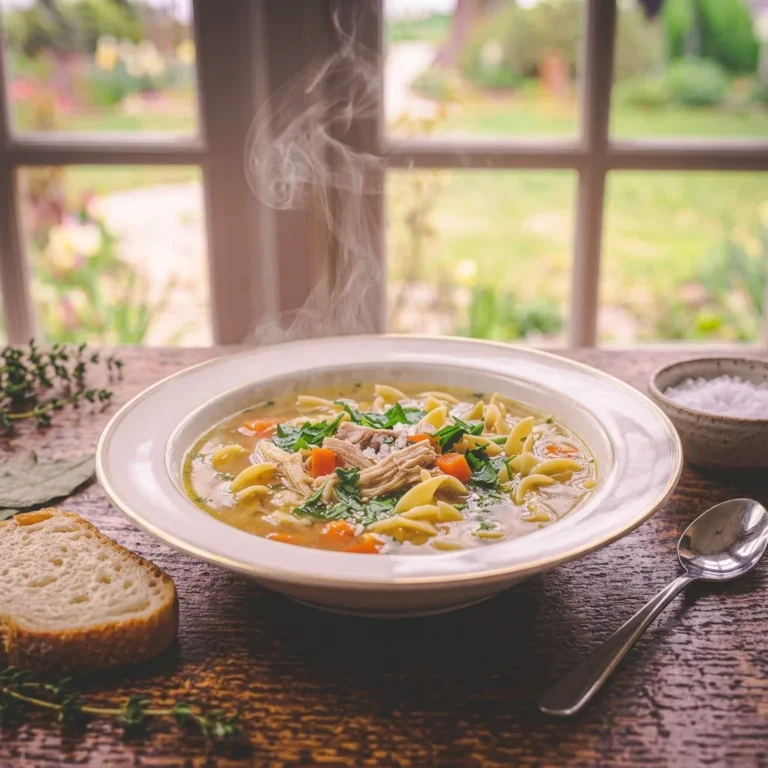
A simple bowl of soup alongside makes chicken caesar salad a full dinner. The salad provides crunch and protein, the soup provides warmth and comfort. Pair with Homemade Chicken Soup for a complete meal that works especially well in cooler months.
For a lighter lunch spread, serve the chicken caesar salad alongside Lemon Herb Chicken sliced and fanned over the romaine for a more elegant plated version.
Storing Chicken Caesar Salad
Chicken caesar salad does not store well once assembled the romaine wilts and the croutons go soft within an hour of being dressed. Store all components separately if you are prepping ahead.
Homemade caesar dressing keeps in the fridge for up to five days in a sealed jar. The oil may solidify slightly when cold bring to room temperature and whisk before using.
Croutons keep at room temperature in an airtight container for up to three days. Do not refrigerate croutons the humidity softens them.
The cooked chicken keeps in the fridge for up to four days. Cold sliced chicken caesar salad chicken is actually excellent – it soaks up the dressing differently than warm and the texture works well.
For meal prep: keep romaine, dressing, croutons, and chicken in separate containers. Assemble each portion individually just before eating.
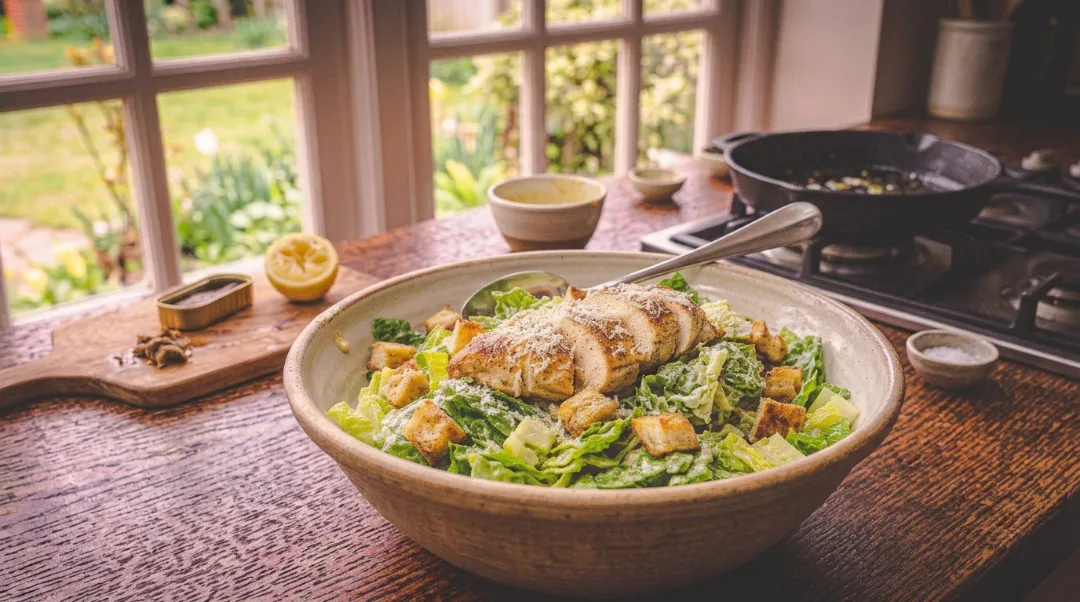
Chicken Caesar Salad
Ingredients
Equipment
Method
- Make the croutons Preheat oven to 375F. Toss cubed day old bread with olive oil, minced garlic, and salt until evenly coated. Spread on a baking sheet in a single layer. Bake for 15 to 18 minutes, tossing once halfway, until golden and hard through the center. Cool completely before using.
- Make the Caesar dressing Mash anchovy fillets and minced garlic into a paste using the flat of a knife on the cutting board. Transfer to a bowl. Add egg yolks, lemon juice, Dijon, and Worcestershire. Whisk until combined. While whisking constantly, add olive oil in a very slow, thin stream. The dressing will thicken and emulsify as you add oil. Whisk in Parmesan. Season with salt and pepper. Set aside.

- Cook the chicken Season chicken breasts with salt, pepper, and garlic powder on both sides. Heat avocado oil in a cast iron skillet over medium-high heat until shimmering. Add chicken and cook for 5 to 6 minutes per side until golden and cooked through at 165F. Rest for 5 minutes then slice against the grain.

- Prep the romaine Chop romaine hearts into bite-sized pieces. Wash in cold water and spin completely dry in a salad spinner. Pat with paper towels for extra dryness if needed. Wet romaine dilutes the dressing and makes the salad soggy.
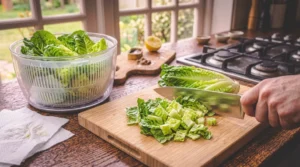
- Assemble Place dried romaine in a large bowl. Add three-quarters of the dressing and toss thoroughly until every leaf is coated. Taste a leaf – it should be well dressed, not lightly coated. Add more dressing if needed.
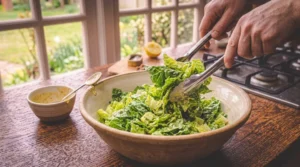
- Top and finish Transfer dressed romaine to a serving bowl or individual plates. Top with sliced chicken, croutons, and freshly grated Parmesan. Add a few turns of black pepper and a small squeeze of lemon if desired.

- Serve Serve chicken caesar salad immediately – romaine wilts quickly once dressed and croutons soften within minutes. This is not a salad that waits well. Serve right away for the best texture contrast between crisp romaine and crunchy croutons.

Notes
- Anchovies are essential: they provide the umami depth that makes Caesar dressing taste the way it should. They do not taste fishy in the finished dressing.
- Freshly grated Parmesan only: pre-grated Parmesan is dry and flavorless. A block of Parmigiano-Reggiano and a microplane makes a visible difference.
- Romaine must be completely dry: wet lettuce dilutes dressing and causes wilting. Salad spinner plus paper towels.
- Day-old bread for croutons: fresh bread retains moisture and never crisps through. Day-old bread toasts completely.
- Emulsify slowly: add oil in a thin stream while whisking. Adding it quickly breaks the emulsion.
- Dress at the last minute: assembled chicken caesar salad does not hold well. Serve immediately.
- Storage: all components stored separately. Dressing in fridge up to 5 days, croutons at room temp up to 3 days, chicken in fridge up to 4 days.
- Pasteurized eggs: use if serving to pregnant women, elderly, or immunocompromised individuals.
NUTRITION
(Per Serving – Estimated)
| Calories | 520 kcal |
| Protein | 42 g |
| Fat | 30 g |
| Saturated Fat | 7 g |
| Carbohydrates | 18 g |
| Fiber | 3 g |
| Sugar | 2 g |
| Sodium | 870 mg |
| Cholesterol | 185 mg |
Calculated using boneless skinless chicken breast, romaine hearts, homemade croutons, and full dressing quantity. Values are estimates and vary by portion size and ingredient brands.
Before You Leave
Does chicken caesar salad need anchovies?
It does if you want it to taste the way it should. Anchovies are the source of the deep umami flavor that makes Caesar dressing distinctive. They do not taste like fish in the finished dressing they dissolve into the background and contribute savory depth that nothing else replicates. If you are anchovy averse, a half teaspoon of anchovy paste from a tube is easier to work with than fillets and the flavor is identical. For food safety guidance on raw egg yolk in the dressing, the USDA recommends using pasteurized eggs if you are concerned about food safety.
Can I use store-bought Caesar dressing?
You can, but the difference between homemade and bottled is significant. Good quality bottled caesar dressing Ken’s Steak House or Cardini’s are the most widely available decent options works for a quick version. Homemade takes eight minutes to make and is noticeably better. The anchovy depth and emulsification texture of fresh dressing are things that bottled versions approximate but do not match.
What is the best lettuce for chicken caesar salad?
Romaine hearts the inner pale leaves of a romaine head. They are more tender, crisper, and less bitter than the outer leaves. They also hold up better under dressing because they are sturdier. Most grocery stores sell romaine hearts in three-packs. Whole romaine works but the outer leaves are best removed and used elsewhere.
Can I make chicken caesar salad ahead of time?
The components can all be made ahead, but the assembled salad cannot. Dress romaine and it wilts within thirty minutes. Prep everything separately dressing, chicken, croutons, washed and dried romaine and assemble just before serving. The dressing actually improves overnight as the anchovy and garlic flavors develop.
How do I keep croutons crunchy?
Use day old bread, bake them until completely golden and hard through the center (not just on the surface), cool completely on a wire rack before storing, and store at room temperature in an airtight container. Never refrigerate croutons. Add them to the salad at the last possible moment before serving.