Best Butter Chicken – Rich, Creamy & Better Than Takeout
Butter chicken was the second Indian dish I ever ordered, right after chicken tikka masala. I ordered it expecting something similar and was immediately confused – the sauce was softer, more buttery, less spicy, somehow both simpler and more complex at the same time. I finished the whole bowl and ordered naan for the leftover sauce.
I spent a long time trying to make butter chicken at home that tasted the way it did at the restaurant. Most of my early attempts were close but missing something – either the sauce lacked depth or the chicken tasted like it had been poached rather than grilled. It was not until I understood the actual history of the dish and what makes it structurally different from tikka masala that the home version started coming out right.
This is the recipe I have settled on after a lot of testing. It is not a thirty minute shortcut version – it is the version that actually tastes like what butter chicken is supposed to be.
The Part Nobody Talks About
Butter chicken murgh makhani was invented in Delhi in the 1950s by Kundan Lal Gujral and Kundan Lal Jaggi at a restaurant called Moti Mahal. The story goes that leftover tandoori chicken was being dried out in the kitchen and a cook combined it with a tomato butter cream sauce to salvage it. The result was so good it became the signature dish of the restaurant and eventually one of the most recognized Indian dishes in the world.
That origin story explains something important about the dish. Butter chicken is not a curry in the traditional sense it was designed around already cooked, already charred tandoori chicken. The char from the tandoor is not a nice addition to butter chicken. It is the foundation of the flavor. Without some version of that charred exterior on the chicken, the dish loses the smokiness and depth that makes it distinctively makhani rather than just tomato cream chicken.
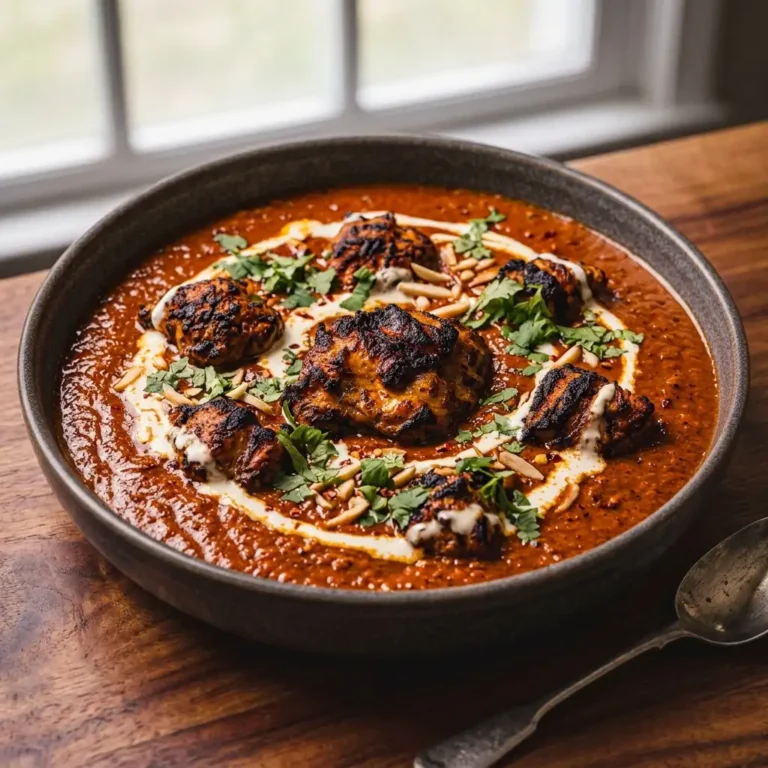
The other thing that defines butter chicken is the sauce texture. Restaurant butter chicken sauce is strained after blending the skins of tomatoes, the fibrous bits of onion, any coarse pieces of ginger or whole spice are removed to produce a completely smooth, almost velvety sauce. Most home recipes skip this step because it adds time, but it is what creates the silky texture that makes the sauce feel different from any other tomato cream curry. An immersion blender without straining gets you eighty percent of the way there. A blender followed by straining through a fine mesh sieve gets you the full restaurant result.
The difference between butter chicken and chicken tikka masala is structural, not just spice level. Tikka masala includes onions in the sauce and does not strain it – you get texture from the cooked down onions. Butter chicken traditionally uses no onions (though many modern recipes include them) and always strains for that completely smooth sauce. Tikka masala is spicier and more assertive. Butter chicken is milder, softer, and relies heavily on the quality of the butter and cream for its character.
Things I Learned Making Butter Chicken at Home
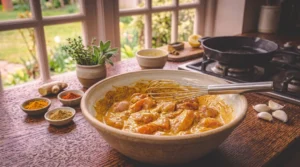
The yogurt marinade for the chicken needs to be thick and full-fat. Thin yogurt or low-fat yogurt does not cling to the chicken well enough to form the coating that chars under the broiler. Greek yogurt or full-fat plain yogurt produces a thick, even coating that blackens at the edges under high heat and gives you the char the dish needs.
The tomato base needs to cook until it has completely lost its raw, acidic edge. This takes longer than most recipes suggest – a good ten to twelve minutes of simmering before adding the cream. The color of the sauce changes as it cooks – from bright red-orange to a deeper, more brick-like color. That color change is the sign that the tomatoes have cooked down enough. Adding cream too early keeps the sauce pale and thin.
Kasuri methi – dried fenugreek leaves – added at the very end is the ingredient most home recipes skip. It transforms the sauce from generic tomato-cream into something specifically makhani. Crush the leaves between your palms before adding – the oil in your palms helps release the volatile aromatic compounds. One teaspoon is enough for a full batch.
Cream splitting is a real risk if the heat is too high when you add it. Once the cream goes in, keep the heat at medium low and do not let the sauce boil. Boiling after adding cream causes the fat to separate from the milk proteins and you get a greasy, broken sauce. Gentle simmering for five minutes is all it needs.
Bone in chicken produces better butter chicken because the marrow contributes to the cooking liquid as the chicken broils. But it is genuinely not necessary for a good result boneless thighs marinated in yogurt and broiled until charred at the edges work very well and are easier to portion.
What Can Go Wrong With Butter Chicken
Sauce is thin and pale: cream was added too early before the tomato base had reduced and deepened in color. Always cook the tomato base until it is visibly darker and thicker before the cream goes in.
Cream split into greasy dots: heat was too high after adding cream. Once cream is in the pot the heat must stay low. If it splits, remove from heat immediately and whisk in a tablespoon of cold water it usually comes back together.
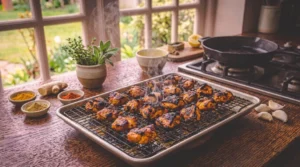
No char on the chicken: broiler was not hot enough or chicken was too far from the heating element. Place the rack on the highest position in the oven, as close to the broiler element as the pan will allow. The chicken should show visible blackened edges within eight to ten minutes.
Sauce tastes flat despite all the spices: kasuri methi was skipped, or the sauce was not cooked long enough before blending. Both kasuri methi and a properly reduced tomato base are non-negotiable for the depth of flavor butter chicken needs.
Sauce is grainy rather than silky: it was not blended or was blended but not strained. An immersion blender directly in the pot produces a smoother result than no blending. Blending and then pushing through a fine mesh sieve produces a completely restaurant-smooth result.
Three Butter Chicken Versions Worth Making
Classic restaurant-style butter chicken: The base recipe as written. Full-fat yogurt marinade, broiled chicken with char, blended and strained tomato-cream sauce, kasuri methi finish. The most time-intensive version and the best result.
Quick weeknight butter chicken: Skip the marinating time. Season the chicken with garam masala, salt, and a pinch of cayenne and pan-sear in ghee until charred on the outside. Make the sauce while the chicken rests. Ready in thirty minutes and genuinely good – not the same depth as the marinated version but satisfying for a weeknight.
Dairy-free butter chicken: Replace full fat yogurt in the marinade with coconut yogurt. Replace heavy cream with full fat coconut cream add it at the same stage. The sauce picks up a slight coconut note that works well with the spices and the color stays similar. Use coconut oil or a neutral oil instead of butter in the sauce base.
What Goes Well With Butter Chicken
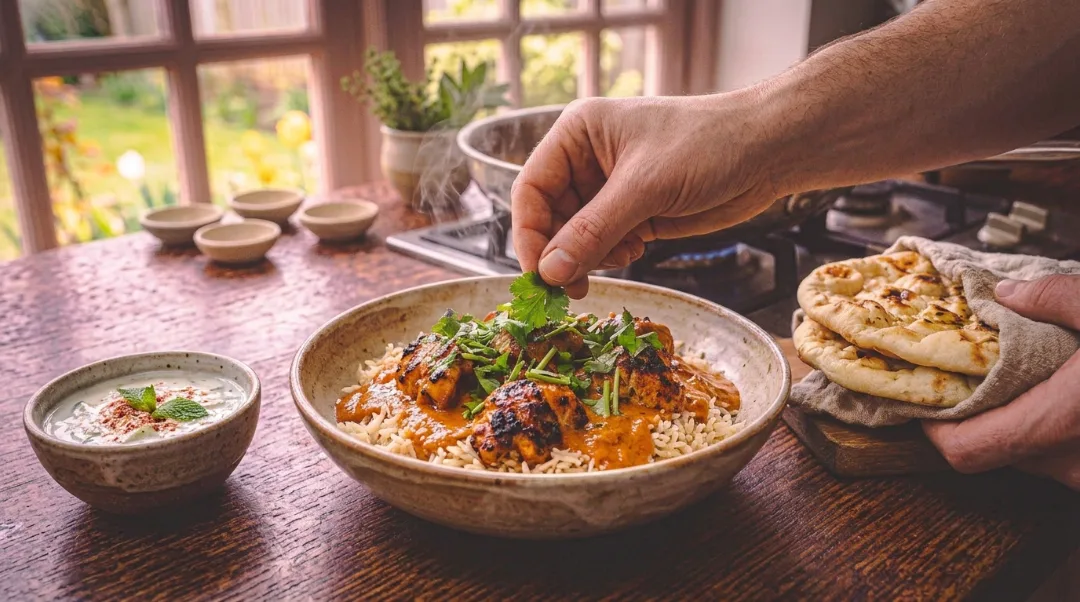
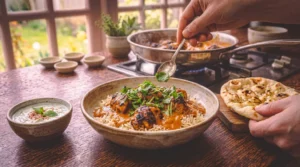
Basmati rice is the traditional and most natural pairing. The sauce is rich and slightly sweet and basmati rice has a natural fragrance that complements the makhani spice profile without competing with it. Rinse the rice twice before cooking to reduce starch and keep the grains separate.
Naan bread for mopping up the sauce is almost mandatory. If you are not making naan from scratch, grocery store naan warmed in a dry pan for two minutes per side is genuinely good. The soft, slightly charred bread soaks up the sauce in a way that rice does not.
A simple cucumber raita – yogurt, grated cucumber, cumin, and salt – on the side cools the warmth of the sauce and gives the palate somewhere to rest between bites of the rich makhani.
For a full Indian-inspired spread, serve butter chicken alongside Chicken Tikka Masala so guests can taste the difference between the two dishes side by side. Or pair with Slow Cooker Chicken on a night when you want something entirely different in approach but equally comforting in result.
Storing and Reheating Butter Chicken
Butter chicken is one of the best dishes you can make ahead. The sauce deepens and improves significantly overnight as the spices continue to bloom in the cream and butter. Day-two butter chicken is often noticeably better than fresh.
Store in an airtight container in the fridge for up to four days. The sauce thickens when cold – this is normal. It loosens back to the right consistency when reheated gently.
Reheat in a saucepan over medium-low heat, stirring frequently. Do not let it boil the cream can split if the temperature gets too high too quickly. Add a splash of water or additional cream if the sauce is too thick. Five minutes over low heat is enough.
Butter chicken freezes exceptionally well for up to three months. The sauce freezes better than the chicken for texture preservation if you are specifically meal prepping for the freezer, consider freezing sauce separately and adding freshly cooked chicken when serving. Thaw overnight in the fridge and reheat on the stovetop.
Butter Chicken
Ingredients
Equipment
Method
- Marinate the chicken Combine all marinade ingredients and whisk until smooth. Add chicken pieces and toss to coat completely. Cover and refrigerate for 1 hour minimum – overnight produces the best result. The yogurt lactic acid gently tenderizes the chicken while the spices penetrate the meat deeply.
- Broil the chicken Preheat broiler to high. Place marinated chicken on a wire rack set over a rimmed sheet pan. Broil on the highest rack for 8 to 10 minutes turning once, until edges are visibly charred and chicken reaches 165F. The char is essential – it adds smokiness that defines butter chicken. Set aside.
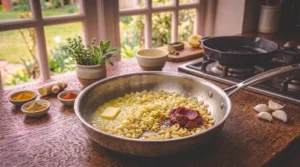
- Build the sauce base Melt two tablespoons of butter in a large skillet over medium heat. Add onion if using and cook for 8 minutes until soft and golden. Add garlic and ginger, stir for 60 seconds. Add tomato paste and stir for 2 to 3 minutes until it darkens and caramelizes. This step removes the raw edge from the tomato paste.
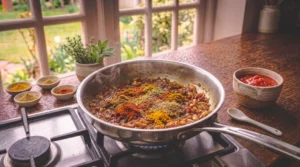
- Add spices and tomatoes Add garam masala, Kashmiri chili, cumin, coriander, and turmeric. Stir for 30 seconds until fragrant. Add crushed tomatoes and sugar. Stir to combine and simmer uncovered for 12 to 15 minutes until the sauce has visibly darkened and thickened.
- Blend the sauce Remove from heat. Use an immersion blender to blend until smooth, or carefully transfer to a blender. For restaurant-silky texture, pour through a fine mesh sieve pressing with a spoon to extract all liquid. Return smooth sauce to the pan.
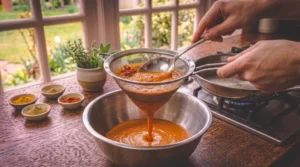
- Add cream and butter Return pan to medium-low heat. Stir in heavy cream and remaining one tablespoon of butter. Do not boil after adding cream. Simmer gently for 5 minutes. Crush kasuri methi between your palms and stir in. Taste and adjust salt.
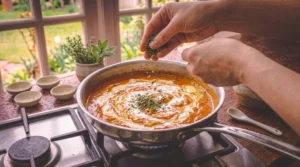
- Add chicken and simmer Add broiled chicken pieces to the makhani sauce. Stir to coat completely. Simmer on low for 5 minutes to allow the chicken to absorb the sauce flavors. The chicken is already cooked – this step is about merging the two components.
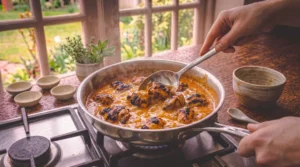
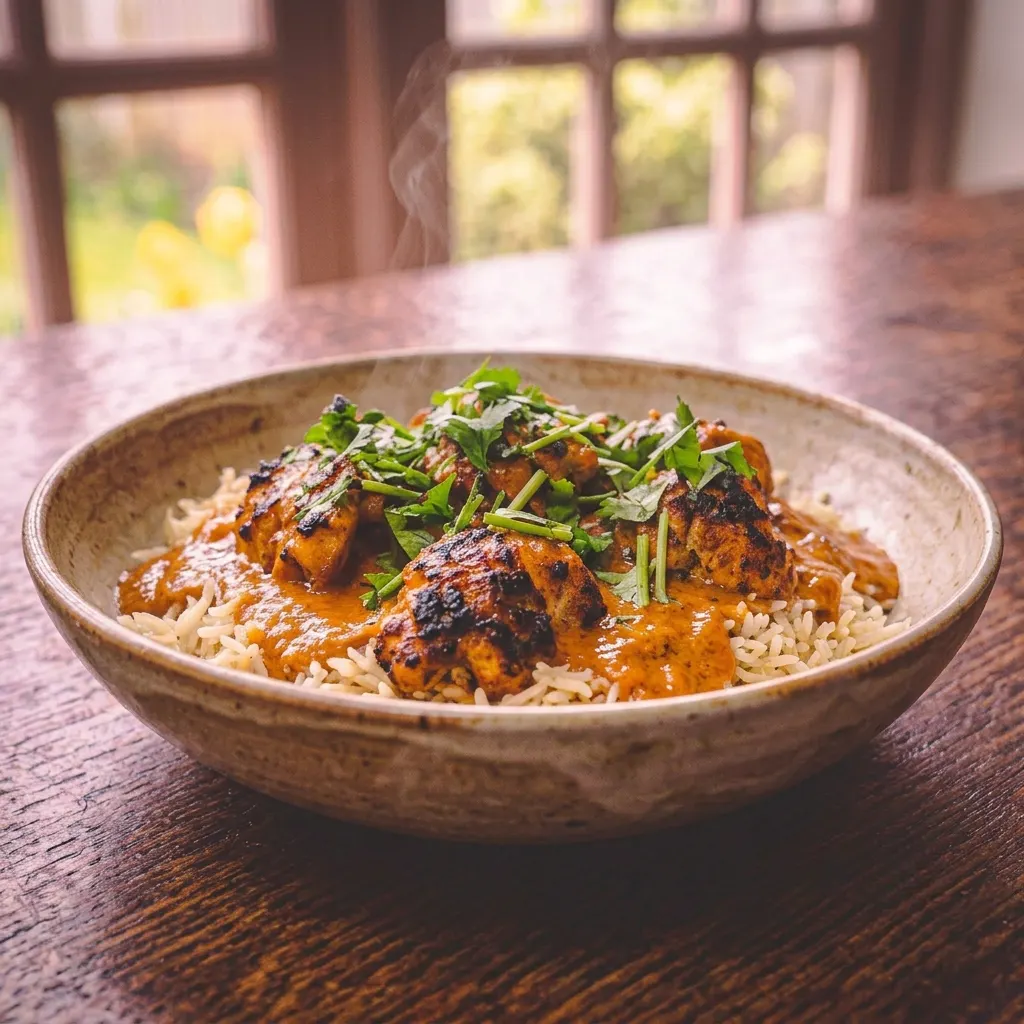
- Serve Spoon butter chicken over basmati rice or serve with warm naan. Garnish generously with fresh cilantro. Serve immediately with cucumber raita and extra naan for the sauce.
Notes
- Full-fat yogurt only: thin or low-fat yogurt does not adhere well for the broiling step.
- Char on chicken: blackened edges are not burnt – they are the source of the smoky depth that defines butter chicken.
- Blend the sauce: even an immersion blender produces a noticeably smoother, better result than unblended sauce.
- Straining optional: pushing blended sauce through a fine mesh sieve achieves restaurant-smooth texture.
- Cream at low heat: do not boil after adding cream. If sauce splits, remove from heat and whisk in cold water.
- Kasuri methi essential: crush between palms before adding. This is what makes it taste like restaurant butter chicken.
- Make ahead: sauce improves overnight. Spices bloom and deepen with time.
- Storage: airtight container, fridge up to 4 days.
- Reheat: saucepan over medium-low, stir frequently, do not boil.
- Freeze: up to 3 months. Sauce freezes better than chicken for texture.
NUTRITION
(Per Serving – Estimated)
| Calories | 450 kcal |
| Protein | 33 g |
| Fat | 28 g |
| Saturated Fat | 14 g |
| Carbohydrates | 16 g |
| Fiber | 2 g |
| Sugar | 7 g |
| Sodium | 790 mg |
| Cholesterol | 175 mg |
Calculated using boneless skinless chicken thighs, full-fat yogurt, heavy cream, and butter. Values are estimates and vary by ingredient brands and portion size. Rice and naan not included.
A Few Final Questions
What is the difference between butter chicken and chicken tikka masala?
Butter chicken (murgh makhani) has a milder, smoother, more buttery sauce made without onions and traditionally strained to a velvety texture. Chicken tikka masala has a spicier, more assertive sauce that includes caramelized onions and is not strained – it has more texture. Both use charred chicken, but butter chicken relies more heavily on the quality of the butter and cream, while tikka masala relies more on the depth of the spiced onion base. For full food safety guidance, the USDA recommends all poultry reach 165F internal temperature.
Can I make butter chicken without a blender?
Yes, but the texture will be different. Without blending, you get a chunkier, more rustic sauce. If you want to get close to the restaurant result without a full blender, use an immersion blender directly in the pot it produces a significantly smoother result than no blending even if it does not achieve the completely silky strained version.
Why is my butter chicken sauce orange and not red?
Butter chicken sauce color ranges from deep orange to brick red depending on the tomato quantity, the cream ratio, and whether Kashmiri chili powder is used. More tomato produces a redder sauce. More cream produces a lighter orange sauce. Kashmiri chili powder gives a vivid deep red-orange that regular paprika cannot match. All are correct the color variation is normal across different recipes.
Can I use chicken breasts instead of thighs for butter chicken?
You can, but thighs produce a noticeably better result. Thighs have more fat and connective tissue, which means they stay juicy through the broiling and the simmering in sauce. Breasts can dry out during broiling if you are aiming for char they need to be watched more carefully. If using breasts, cut slightly larger and monitor internal temperature carefully.
How long should I marinate chicken for butter chicken?
One hour is the minimum for any noticeable tenderizing effect from the yogurt. Four to six hours is ideal. Overnight is excellent and produces the most deeply flavored, most tender chicken. Unlike lemon based marinades, yogurt is gentle enough that overnight marinating does not make the texture mushy.
I Still Make It This Way
Butter chicken took me a while to get right at home because I did not understand what it actually was not just a creamy tomato chicken dish, but a specific result built around charred chicken and a strained, silky sauce. Once those two things clicked, the recipe has never failed.
Try it once properly with the char, with the strain, with the kasuri methi and then decide if the shortcuts are worth it. Leave a comment below and let me know how it turned out.