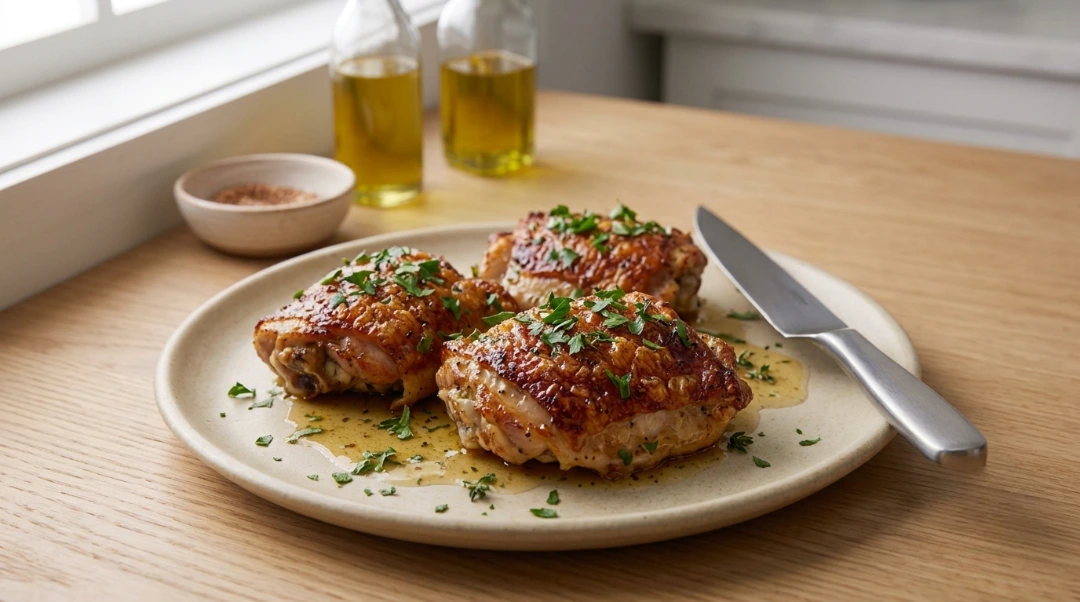
Best Crispy Baked Chicken Thighs – Golden Skin, Juicy Every Time
These crispy baked chicken thighs changed the way I cook chicken at home and it started with two simple mistakes I kept makings. They came out fine – cooked through, decent flavor – but the skin was always a little soft. Rubbery, almost. The kind you peel off and set aside instead of eating.
Then I changed two things at once and the result was so different I actually went back and checked if I had used the same recipe. I had. The difference was the pan and the temperature. That was it.
Bone-in, skin-on chicken thighs are one of the most forgiving cuts you can cook. They are hard to dry out, they take seasoning well, and they cost a fraction of what chicken breasts run at the grocery store – usually around $1.75 per pound versus nearly $9 for breasts. But they only reach their potential when the skin gets properly crispy, and most recipes skip the details that actually make that happen.
A Small Trick That Made a Big Difference
Here is what most recipes do not tell you.
Chicken skin is about 50 percent fat. For that fat to render out and turn crispy, it needs two things: high heat and somewhere for the moisture to escape. If either of those is missing, the skin steams in its own moisture and stays soft no matter how long it bakes.
The metal sheet pan matters more than most people realize. Glass and ceramic pans hold heat slowly and trap steam underneath the chicken. Parchment paper and silicone mats do the same thing – they insulate the bottom of the chicken from direct heat. A bare metal sheet pan transfers heat fast and lets the underside crisp properly.
The second part is temperature. At 375F, the fat renders slowly and the skin can turn pale and chewy before enough moisture has escaped. At 425F, the skin crisps much faster and the inside stays juicy because the whole cook is shorter.
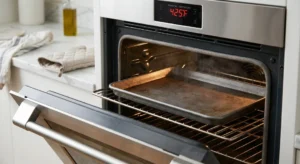
One more thing: preheating the pan in the oven for five minutes before you add the chicken makes a noticeable difference. The thighs go onto a hot surface immediately, which starts crisping the underside from the first second instead of waiting for the pan to heat up.
Those three things together – metal pan, 425F, preheated surface – are what actually produces crispy skin. Not a special ingredient. Not a secret technique. Just heat managed correctly.
A Few Things Worth Knowing
Bone-in, skin-on is not optional if you want crispy results. The bone keeps the meat juicy during the longer cook time, and the skin is what crisps. Boneless skinless thighs are fine for other recipes but they will not give you the same result here.
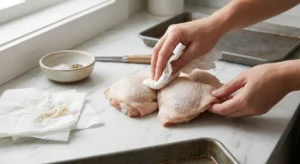
Pat the chicken completely dry before anything else. Use paper towels and take your time – top, bottom, and any folds where moisture hides. This is genuinely the most important step. Wet skin turns to steam in the oven and steam prevents browning.
Take the chicken out of the fridge about 15 minutes before cooking. Cold chicken hitting a hot pan causes uneven cooking – the outside can overcook before the center is done. A few minutes on the counter makes the cook more even.
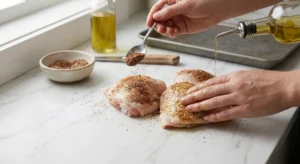
If you want flavor in the meat and not just on the skin, lift the skin gently and rub some seasoning directly underneath. It takes 30 seconds and makes a real difference to the flavor of every bite.
Avocado oil works better than olive oil here because of its higher smoke point. At 425F, olive oil can start to smoke before the chicken is done. Avocado oil handles the heat without any issue.
Where Most People Go Wrong
Soft skin almost always comes down to one of three things.
The chicken was not dry enough. Even a small amount of surface moisture creates steam in the oven. The skin might brown eventually but it will not get that crackle. Pat dry, then pat dry again.
The pan was wrong. If you used a glass dish, a ceramic baking dish, or lined the pan with parchment, the bottom of the chicken was insulated from the heat. Swap to a bare metal sheet pan and the difference is immediate.
The oven was not hot enough – or not preheated long enough. Ovens take longer to actually reach temperature than the preheat signal suggests. Give it an extra five minutes after the beep before putting the chicken in.
One thing that does not go wrong with thighs: overcooking. Unlike chicken breasts, thighs get better with a bit more time. The connective tissue breaks down as the temperature rises past 165F, which is why pulling them at 175 to 185F actually gives you more tender, juicy meat – not dry meat. That is the opposite of what most people expect.
Ways to Change It Up
Lemon herb version: Add lemon zest to the spice blend and finish with fresh thyme and a squeeze of lemon after baking. Works especially well in spring and summer.
Spicy version: Double the cayenne and add half a teaspoon of chili powder. Serve with something cooling on the side – yogurt sauce or a simple cucumber salad cuts through the heat well.
Honey garlic glaze: In the last five minutes of baking, brush the skin with a mix of two tablespoons of honey and one minced garlic clove. Goes back in the oven for the final few minutes uncovered. The glaze caramelizes and sticks to the crispy skin.
Air fryer version: 400F for 22 to 25 minutes, skin side up, no flipping. The air fryer circulates heat on all sides so the skin crisps faster. Check at 20 minutes.
What I Usually Serve Alongside
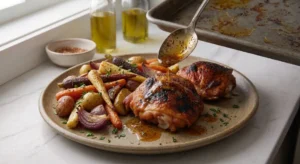
The pan drippings left after baking are good enough to use as a simple sauce – just spoon them over whatever you are serving. Roasted vegetables go directly on the same pan for the last 15 minutes of cooking and soak up the drippings as the chicken finishes.
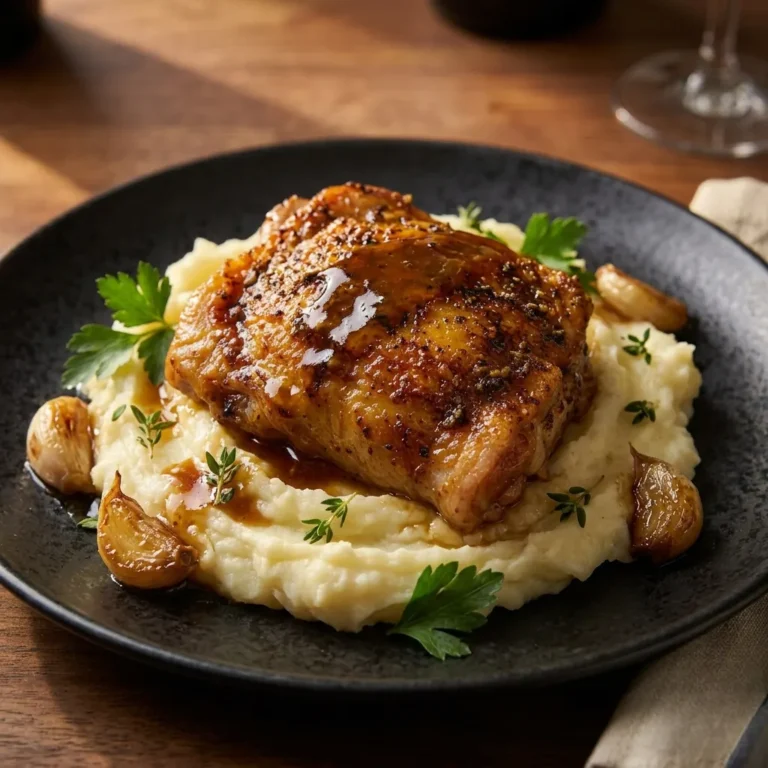
Mashed potatoes are the most popular pairing for a reason. The drippings work as a sauce and the richness of the thighs holds up to the heaviness of the potatoes without either one overpowering the other.
Rice works just as well and comes together faster. A simple green salad on the side keeps the plate balanced.
For a one-pan meal, add halved potatoes and broccoli to the sheet pan around the 20-minute mark. By the time the chicken is done, the vegetables are roasted and the whole thing is ready at once.
Try this alongside Garlic Butter Chicken if you want a pan sauce option, or use our basic chicken marinade to prep these the night before.
Storing Extras
Leftovers keep well for up to four days in an airtight container in the fridge. The skin will soften overnight – that is normal and unavoidable. Reheating brings most of it back.
To reheat and get the skin crispy again: oven at 375F for about 12 minutes, uncovered, on a wire rack if you have one. The air fryer at 375F for four to five minutes works even better – the skin comes back almost completely.
The microwave reheats the meat fine but the skin goes soft and stays that way. Use it if you are just eating the meat, but skip it if the crispy skin is the point.
These freeze well for up to three months. Freeze individually on a sheet pan first so they do not stick together, then transfer to a bag. Reheat from frozen in the oven at 375F for about 25 to 30 minutes.
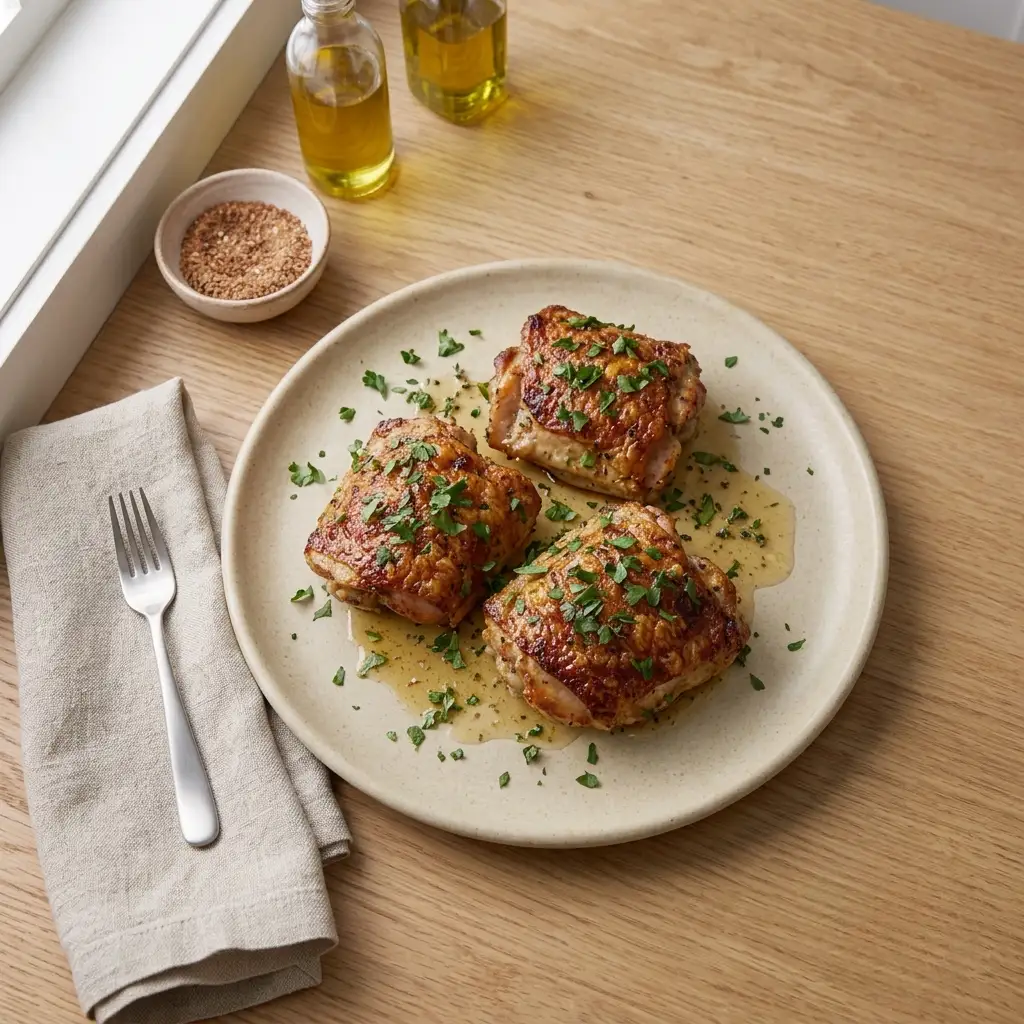
Crispy Baked Chicken Thighs
Ingredients
Equipment
Method
- Preheat oven and pan Place metal sheet pan in oven and preheat to 425F (220C). Letting the pan heat up with the oven means the chicken hits a hot surface immediately and starts crisping from the first second.
- Dry the chicken Remove chicken thighs from fridge 15 minutes before cooking. Pat completely dry with paper towels – top, bottom, and any folds where moisture hides. This step is not optional. Wet skin steams instead of crisping.
- Season the chicken Mix all spices together in a small bowl. Drizzle avocado oil over the chicken and rub to coat evenly. Sprinkle spice blend generously over both sides. For extra flavor, gently lift the skin and rub a small amount of seasoning directly underneath.
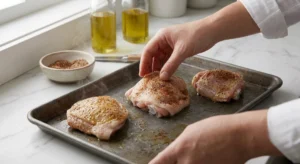
- Bake skin side up Carefully remove the hot pan from the oven. Place chicken thighs skin side up directly on the hot metal pan. Leave space between each piece – crowded chicken steams instead of crisps. Bake for 35 to 40 minutes without opening the oven or flipping.
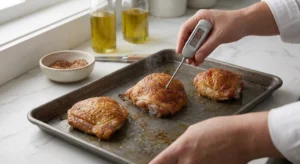
- Check the temperature At 35 minutes, check the internal temperature with an instant-read thermometer inserted near the bone without touching it. For safe eating, 165F is the minimum. For best texture with thighs, pull at 175 to 185F – at this range the fat and collagen have fully rendered and the meat is more tender, not less.
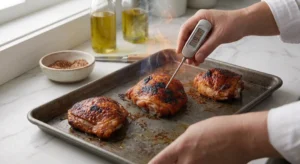
- Optional broil If the skin is golden but you want it crispier, turn the broiler to high for 2 to 3 minutes. Watch it closely – it goes from perfect to burnt fast. This step is optional. At 425F with a preheated metal pan, the skin usually does not need it.
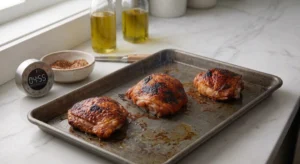
- Rest Remove from oven and rest on the pan for 5 minutes before serving. Resting lets the juices redistribute through the meat.
- Serve Serve hot with your choice of sides. Spoon any pan drippings over the chicken or vegetables on the plate. The drippings are well-seasoned and add a lot of flavor.
Notes
- Metal pan is important: glass, ceramic, or parchment-lined pans insulate the bottom of the chicken and prevent the underside from crisping.
- Preheating the pan: this one step alone makes a noticeable difference to the bottom crust.
- Pat dry thoroughly: this is the single most important prep step. Take more time on this than you think you need.
- Temperature: 175-185F internal gives the best texture for thighs. They are not overcooked at this range – the fat and collagen render fully and make the meat more tender.
- Make ahead: season the chicken and leave uncovered in the fridge for up to 24 hours. The fridge dries the skin slightly which helps it crisp faster.
- Storage: airtight container, fridge up to 4 days.
- Reheat: oven at 375F for 12 minutes, or air fryer at 375F for 4 to 5 minutes. Both restore most of the crispiness.
- Freeze: up to 3 months. Reheat from frozen at 375F for 25 to 30 minutes.
NUTRITION (Per Serving – Estimated)
| Calories | 340 kcal |
| Protein | 28 g |
| Fat | 24 g |
| Saturated Fat | 6 g |
| Carbohydrates | 2 g |
| Fiber | 0 g |
| Sugar | 0 g |
| Sodium | 610 mg |
| Cholesterol | 140 mg |
Calculated using bone-in skin-on chicken thighs, avocado oil, and listed spices. Values are estimates and vary by portion size and specific ingredient brands.
Still Wondering? About Crispy Baked Chicken Thighs
Can I use boneless skinless thighs?
Yes, but the results will be different. Without the skin there is nothing to crisp, and boneless thighs cook faster – reduce the time to about 25 minutes and check at 165F. They will still be juicy and flavorful, just not crispy.
What temperature should I pull chicken thighs from the oven?
Safe minimum is 165F, but thighs actually taste better between 175F and 185F. At that higher range the collagen and fat break down fully, which makes the meat more tender and juicy – not drier. Use an instant-read thermometer and check near the bone without touching it. According to the USDA Safe Temperature Chart and FoodSafety.gov, poultry is safe at 165F internal temperature.
My skin always comes out soft. What am I doing wrong?
Most likely the chicken was not dry enough, the pan was insulated (parchment, glass, ceramic), or the oven was not at full temperature. Try patting the chicken dry for longer, switching to a bare metal sheet pan, and giving your oven an extra five minutes after it signals preheat.
Can I prepare these ahead of time?
Season the chicken up to 24 hours in advance and keep it uncovered in the fridge on a plate. The uncovered fridge actually dries out the skin slightly, which helps it crisp better in the oven. Salting ahead also seasons the meat more deeply.
Can I use frozen chicken thighs?
Thaw them completely first. Cooking from frozen leads to uneven results – the outside can overcook while the center is still coming up to temperature. Thaw overnight in the fridge.
This One Stays in My Rotation
Once the pan and temperature thing clicked, this became one of the most reliable dinners I make. It does not require much attention, it is hard to mess up, and the skin genuinely crisps in a way that makes it worth eating instead of leaving on the plate.
If you try it, leave a comment below and let me know how it went.