Juicy Baked Chicken Breast – Foolproof Method, Perfect Every Time
Juicy baked chicken breast has a reputation problem. Mostly deserved. I spent a long time making chicken breast that came out technically cooked but completely unpleasant – dry, chewy, the kind of thing you eat with enough sauce to distract from the texture.
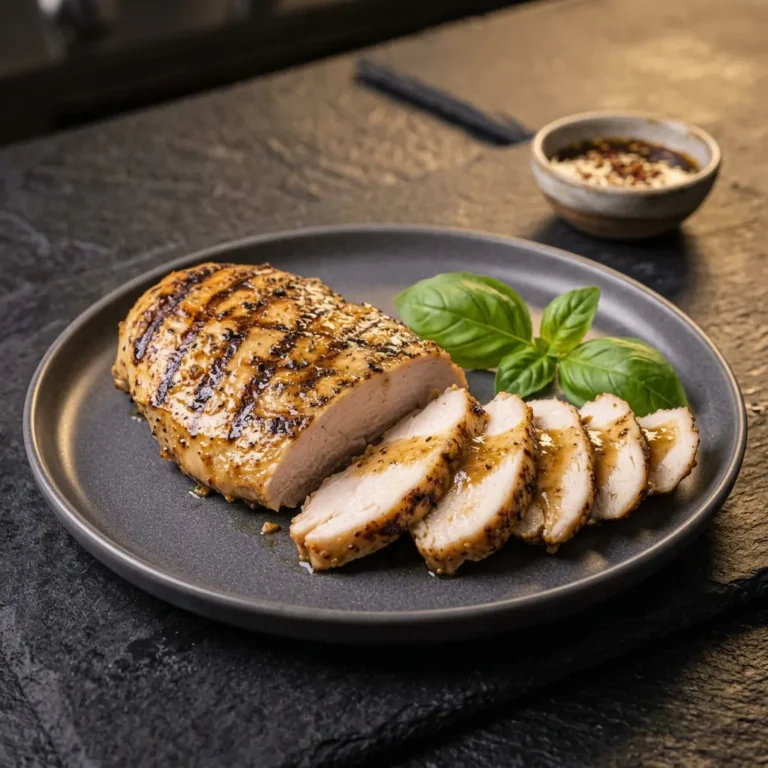
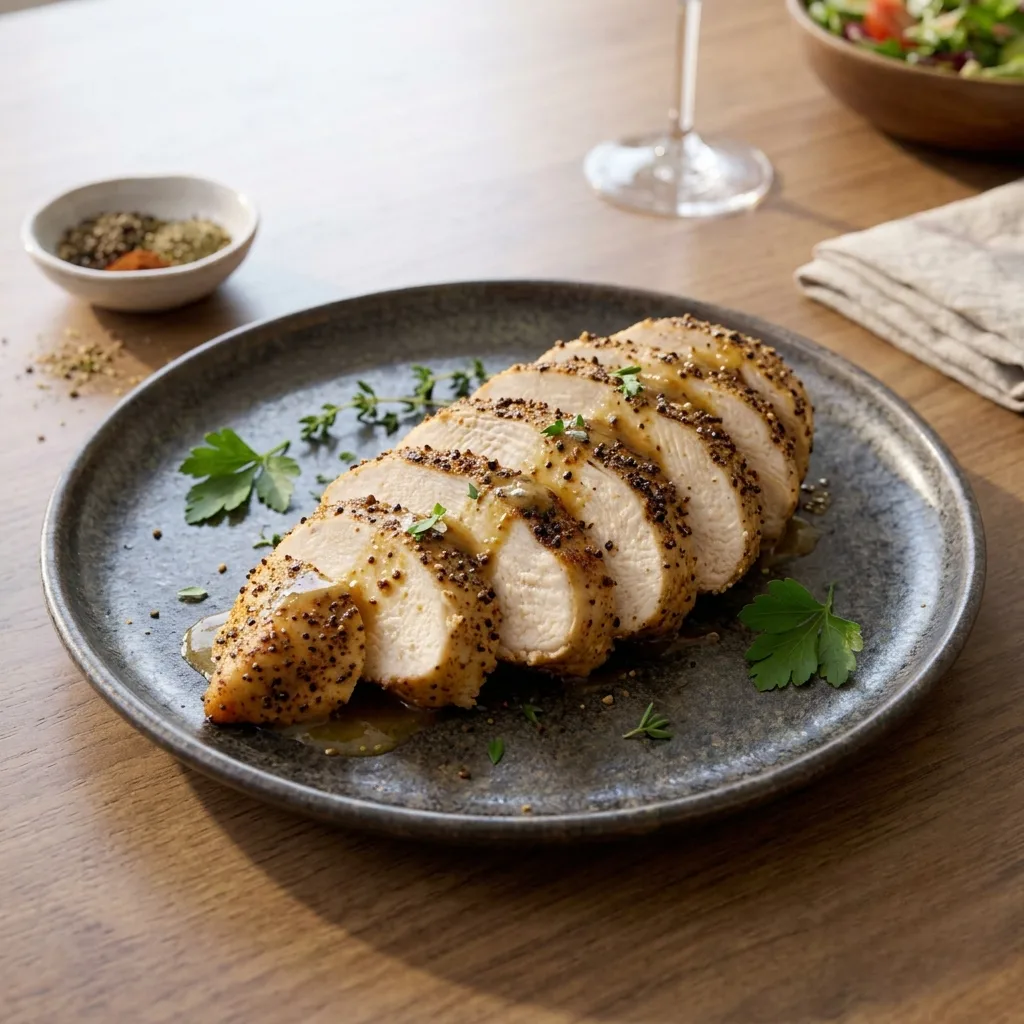
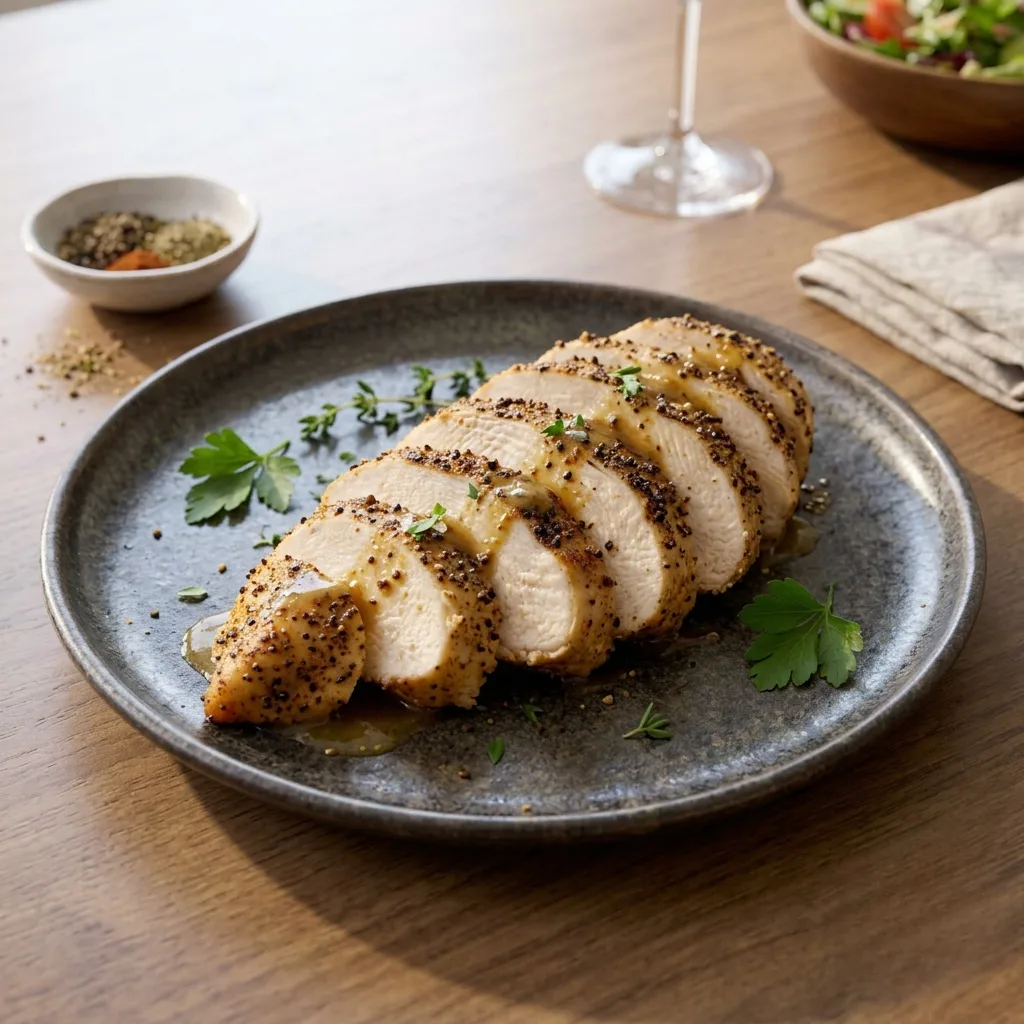
Then I stopped baking it at 350F and everything changed. That one adjustment – higher heat, shorter time – made more difference than any marinade or brine I had tried. The first time I pulled a juicy baked chicken breast out of the oven at 425F and cut into it, I genuinely did not expect what I found. Moist all the way through. Slightly golden on top. No sauce required.
I have made this enough times now to understand exactly why it works, and that understanding makes the whole thing more reliable. Once you know what is actually happening inside the oven, juicy baked chicken breast stops feeling like luck and starts feeling like a repeatable result.
What Most Recipes Get Wrong
The single biggest mistake with juicy baked chicken breast is low and slow cooking. Most older recipes call for 350F for 30 to 35 minutes. At that temperature, moisture evaporates gradually from the meat over a long period. By the time the center reaches 165F, the outer layers have been releasing moisture for half an hour. The result is dry chicken – not because of anything wrong with the chicken, but because of the temperature choice.
At 425F the math changes. The higher heat cooks the chicken faster, which means less total time for moisture to escape. The outside develops a light golden crust quickly, and the inside reaches safe temperature before the outer layers have dried out. The whole process takes about 18 to 22 minutes instead of 35.
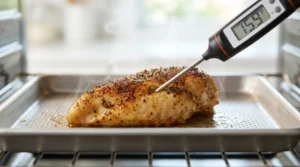
There is also the carryover cooking factor that almost every recipe ignores. Chicken breast continues cooking after it leaves the oven – the stored heat in the meat keeps raising the internal temperature for several minutes. If you wait until the thermometer reads 165F before pulling it, you have already overshot. The meat will land around 168 to 170F by the time it finishes resting, which pushes it from juicy into dry. Pull at 158 to 160F, rest for five minutes, and it arrives exactly where it needs to be.
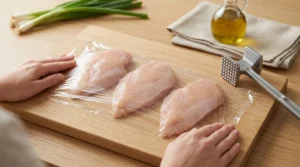
One more thing that makes a genuine difference: pounding the chicken to an even thickness. Chicken breasts are thicker in the middle and taper to a thin point at one end. At that shape, the thin end reaches 165F several minutes before the thick middle does. By the time the center is cooked, the thin end is already dry. Pounding to an even three-quarter inch thickness means everything finishes at the same time. It takes one minute and makes the single biggest difference to the final texture.
Read This Before You Start
Brown sugar in the seasoning is not a dessert choice – it is a technique. A small amount of sugar promotes caramelization on the surface of the chicken as it bakes. This creates the slight golden color you see on a good juicy baked chicken breast without any pan searing. The amount used here is small enough that the flavor reads as savory, not sweet. Skipping it means pale, flat-looking chicken even if it is cooked correctly.
Smoked paprika does the same work visually. It adds a deep reddish color to the crust that looks like the chicken has been cooking longer than it has. Both the sugar and the smoked paprika are working on appearance and flavor at the same time.
Avocado oil handles the 425F oven temperature better than olive oil. At high heat, olive oil is close to its smoke point and can start to taste slightly bitter on the surface of the chicken. Avocado oil has a higher smoke point and stays neutral. If olive oil is what you have, it still works just be aware the surface might taste slightly different.
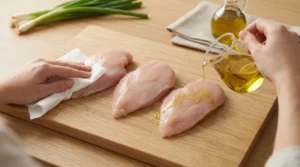
Pat the chicken dry before seasoning. Surface moisture turns to steam in the oven, which is what creates pale, soft looking chicken even at high heat. Thirty seconds with paper towels makes the difference between a golden crust and a steamed one.
If Your Juicy Baked Chicken Breast Still Turns Out Dry
Dry results almost always come from one of four things.
The oven temperature was actually lower than set. Ovens run hot or cold, and many run significantly cooler than the dial suggests. An inexpensive oven thermometer from any grocery store or hardware store solves this permanently. If your oven runs 25F cool, you have been baking juicy baked chicken breast at 400F while thinking it was 425F.
The chicken was not pounded to even thickness. Even a half-inch difference between the thickest and thinnest point creates uneven cooking. The thin end dries out before the thick middle is safe.
The thermometer was checked too late. If you are reading 165F at the thickest point when you pull it from the oven, carryover cooking will take it to 168 to 170F. Pull at 158 to 160F instead.
The chicken was too large. Grocery store chicken breasts have gotten significantly larger over the years – many now weigh 10 to 12 ounces, which is close to double the 6-ounce size most recipes were developed for. Larger breasts need more time, and pounding is even more important for them.
Four Juicy Baked Chicken Breast Variations Worth Making
Lemon herb juicy baked chicken breast: Add lemon zest to the spice blend and lay two sprigs of fresh thyme on top of the chicken before baking. Finish with a squeeze of lemon and fresh parsley after it comes out. Clean and bright flavor that works especially well for meal prep.
Parmesan crusted version: Mix two tablespoons of grated Parmesan and two tablespoons of panko breadcrumbs into the spice blend. Press it onto the surface of the chicken before baking. The cheese and breadcrumbs form a light crust that stays crispy and adds a lot of flavor.
Spicy version: Add half a teaspoon of cayenne and a teaspoon of chili powder to the seasoning blend. Works especially well if you are using the chicken in tacos or rice bowls where the heat carries through the whole dish.
Honey glazed: In the last three minutes of baking, brush the top of the juicy baked chicken breast with a mix of one tablespoon of honey and half a teaspoon of soy sauce. Return to the oven uncovered. The glaze caramelizes quickly and gives the chicken a glossy, restaurant-style finish.
What Goes Well With It
Juicy baked chicken breast is genuinely one of the most useful things you can have cooked and ready in the fridge. It works cold, warm, sliced, shredded, or cubed – in salads, sandwiches, pasta, rice bowls, or on its own.
For a full dinner plate, mashed potatoes or jasmine rice underneath the chicken with the pan drippings spooned over the top is a complete meal in about 25 minutes. Roasted broccoli or asparagus on the side keeps things balanced.
For meal prep, slice or shred two or three juicy baked chicken breasts at once and store them in the fridge. Through the week they go into salads, wraps, pasta, and grain bowls without any additional cooking.
Pair with Best Chicken Marinade if you want to add flavor before cooking, or serve alongside Crispy Baked Chicken Thighs when feeding a group that prefers different cuts.
Storing Your Juicy Baked Chicken Breast
Juicy baked chicken breast keeps well in the fridge for up to four days in an airtight container. It reheats better than most people expect if you use the right method.
The skillet method is best: place sliced or whole chicken in a covered skillet over medium-low heat with two tablespoons of water or chicken stock. Cover and heat for three to four minutes. The steam keeps the chicken from drying out during reheating and the result is close to freshly cooked.
Microwave works in a pinch – cover loosely and heat at 50 percent power in 30-second intervals. Full power makes chicken breast rubbery fast.
Freezes well for up to three months. Wrap individually in plastic wrap before placing in a freezer bag so you can pull out single portions. Thaw overnight in the fridge before reheating.
Juicy Baked Chicken Breast
Ingredients
Equipment
Method
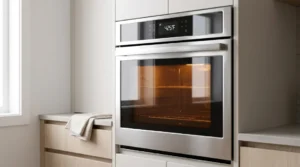
- Preheat oven Preheat oven to 425F (220C). Let it fully preheat for at least 10 minutes after the signal – ovens often read ready before they have fully stabilized at temperature.
- Pound to even thickness Place chicken breasts between two sheets of plastic wrap or in a zip-top bag. Using a meat mallet or rolling pin, pound the thickest part down until the entire breast is an even 3/4 inch thick. This is the single most important step for juicy baked chicken breast – uneven thickness means uneven cooking.
- Dry and oil the chicken Pat each chicken breast completely dry with paper towels on both sides. Drizzle avocado oil over each piece and rub to coat evenly. Surface moisture creates steam and prevents browning – patting dry takes 30 seconds and makes a visible difference.
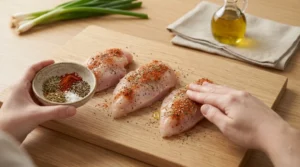
- Season generously Mix all spice blend ingredients in a small bowl. Sprinkle generously over both sides of each chicken breast, pressing lightly so the seasoning adheres. Do not be shy with the seasoning – chicken breast has no skin and needs the spice blend to carry the flavor.
- Bake Place seasoned chicken breasts on the rimmed sheet pan with space between each piece. Bake at 425F for 18 to 22 minutes depending on size. 6 oz breasts take about 18 minutes, 7 to 8 oz take about 20 minutes, and anything over 9 oz takes 22 minutes or more.
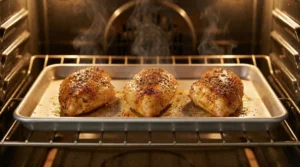
- Check temperature At 18 minutes, check the internal temperature at the thickest point with an instant-read thermometer. Pull the juicy baked chicken breast from the oven at 158 to 160F – not 165F. Carryover cooking will bring it to 165F during resting. According to chicken is safe at 165F internal temperature.
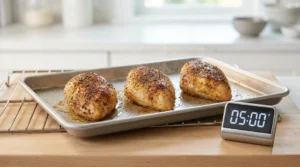
- Rest Remove from the oven and rest on the pan for 5 full minutes. Do not cut into it yet. Resting allows the juices that have been pushed toward the center during cooking to redistribute back through the meat.
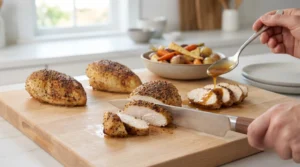
- Serve Slice against the grain for the most tender texture – cutting across the muscle fibers shortens them, which makes each bite easier to chew. Spoon any pan drippings over the chicken or over whatever side dishes you are serving alongside.
Notes
- Pull at 158-160F not 165F: carryover cooking takes it to 165F during the 5-minute rest.
- Pounding is essential: do not skip this step – it is the biggest factor in even cooking.
- Oven thermometer: if results are inconsistent, your oven may run cool. An oven thermometer is worth it.
- Pat dry before cooking: surface moisture creates steam and prevents the golden crust.
- Brown sugar: small amount, but important for color and flavor. Do not skip.
- Storage: airtight container, fridge up to 4 days.
- Reheat: covered skillet over medium-low with 2 tbsp water, 3 to 4 minutes.
- Freeze: up to 3 months. Wrap individually, thaw overnight in fridge.
- Meal prep: bake a full batch, slice or shred, use through the week in salads, wraps, rice bowls.
NUTRITION
(Per Serving – Estimated)
| Calories | 265 kcal |
| Protein | 40 g |
| Fat | 10 g |
| Saturated Fat | 2 g |
| Carbohydrates | 3 g |
| Fiber | 0 g |
| Sugar | 1 g |
| Sodium | 520 mg |
| Cholesterol | 120 mg |
Calculated using 7 oz boneless skinless chicken breasts with listed spice blend and avocado oil. Values are estimates and vary by breast size and ingredient brands.
Before You Leave
Does juicy baked chicken breast really not need brining?
Not with this method. The combination of pounding to even thickness, 425F heat, and pulling at 158 to 160F does the same work as brining. Brining adds about 10 to 20 minutes of extra prep time. If you have the time and want the extra insurance, a 15-minute brine in salt water (1/4 cup kosher salt per quart of water) will not hurt – it just is not necessary here. For full food safety reference, check the USDA safe minimum internal temperature guidelines.
What size chicken breasts work best?
Breasts in the 6 to 8 ounce range are ideal for this method – they pound down to an even thickness easily and cook through in 18 to 20 minutes. Larger breasts (10 to 12 oz) need closer to 22 to 25 minutes and benefit more from pounding. Check by size, not just by time – and always confirm with a thermometer.
Can I make juicy baked chicken breast ahead of time for meal prep?
Yes – this is one of the best uses for this recipe. Bake a full batch on Sunday, slice or leave whole, and store in the fridge for up to four days. The chicken works cold in salads and wraps, or reheated in a covered skillet for warm dishes. Flavor and texture hold well through the week.
Why does my chicken look grey instead of golden?
Either the oven was not hot enough, the chicken had too much surface moisture before baking, or the brown sugar was left out of the seasoning. Patting dry, using 425F, and including a small amount of brown sugar in the spice blend solves all three.
Can I cook juicy baked chicken breast from frozen?
Not recommended for this method. Frozen chicken bakes unevenly – the outside reaches safe temperature well before the center thaws, which means either the center is undercooked or the outside is overcooked. Thaw overnight in the fridge for best results.
Give This Juicy Baked Chicken Breast a Try
Once the temperature and timing clicked, juicy baked chicken breast became one of the most dependable things in my regular rotation. It takes 25 minutes start to finish and the result is reliable enough to build a week of meals around.
Try it once with this method and see how it compares to what you have been making. Leave a comment below and let me know.